Atlas V
Legendary workhorse with a flawless mission record across flagship interplanetary probes and crew flights.
Atlas V is a two-stage expendable launch vehicle operated by United Launch Alliance (ULA). Originally designed by Lockheed Martin for the US Air Force Evolved Expendable Launch Vehicle (EELV) program, Atlas V is one of the most reliable rockets in spaceflight history, having successfully delivered premier scientific missions to Mars, Jupiter, Pluto, and the Sun.
SpaceStats Reliability & Flight Record

Architecture Analysis & Development Story
Engineering DossierHistory & Development
Making its maiden flight in August 2002, Atlas V introduced the Common Core Booster (CCB) powered by the Russian-designed RD-180 dual-combustion chamber engine. Over more than 100 missions spanning two decades, the launcher demonstrated flawless reliability across all 400 and 500 series configurations and dual-engine Centaur variants for Boeing Starliner crew launches.
Operational Record & Mission Impact
Launched NASA's Mars Reconnaissance Orbiter, Curiosity rover, Perseverance rover & Ingenuity helicopter, New Horizons to Pluto, Juno to Jupiter, Solar Dynamics Observatory, and OSIRIS-REx asteroid sample return mission.
Key Engineering Innovations & Design Highlights
Common Core Booster powered by the high-pressure staged combustion RD-180 engine (4,152 kN vacuum thrust).
Cryogenic Centaur III upper stage using the flight-proven Aerojet Rocketdyne RL10A/C engine.
Flexible strap-on solid rocket booster integration (up to 5 Aerojet Rocketdyne AJ-60A or Northrop Grumman GEM-63 boosters).
High orbital insertion accuracy with minimal circularization delta-V dispersion.
Technical & Propulsion Specifications
Operator: United Launch AllianceVehicle Dimensions & Mass
- Overall Height
- 58.3 m
- Body Diameter
- 3.81 m
- Gross Lift-off Mass
- 546.7 t
- Stages Count
- 2
- Fairing Diameter
- 5.4 m
- Strap-On Boosters
- 5x Boosters
Common Core Booster (CCB)
- Main Engines
- 1x RD-180 (Dual Nozzle)
- Propellant
- LOX / RP-1
- SL Thrust
- 3,827 kN
- Vacuum Isp
- 338.4s
- Dry Mass
- 21.1 t
- Recovery Mode
- None
Centaur III Upper Stage
- Upper Engine
- 1x RL10C-1
- LEO Capacity
- 18.9 t
- GTO Capacity
- 8.9 t
- TLI (Lunar)
- 7 t
- Cost per Launch
- $115,000,000
- LEO Price / kg
- ~$6,100 / kg
Launch Complexes & Spaceports Network
2 Active Launch PadsMilestone & Historic Missions
Key Flight AchievementsNew Horizons
Customer: NASA
Fastest human-made spacecraft at launch, flying past Jupiter and conducting the first flyby of Pluto and Arrokoth.
Mars 2020 (Perseverance & Ingenuity)
Customer: NASA
Direct trans-Mars injection sending the Perseverance rover and Ingenuity helicopter to Jezero Crater.
High-Resolution Photo Gallery & Media
4 photos & renders of Atlas V with verified copyright credits
Atlas V 541 Liftoff from SLC-41
United Launch Alliance Atlas V 541 launching between the lightning towers of Space Launch Complex 41.

Atlas V Mars 2020 Perseverance Liftoff
Atlas V 541 configuration launching NASA's Mars 2020 Perseverance rover mission to Mars.
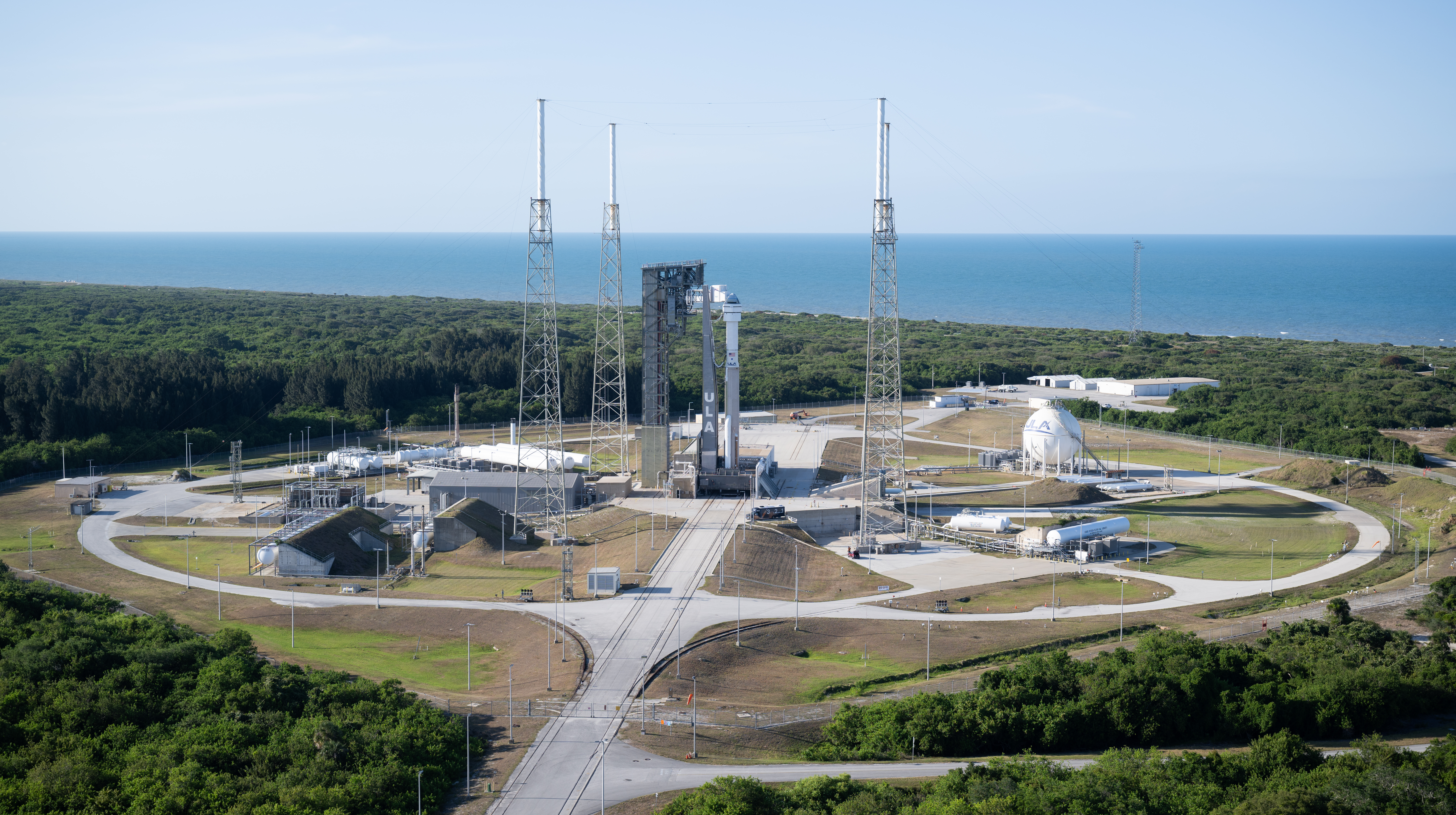
Atlas V with Starliner at SLC-41
Atlas V N22 configuration with Boeing Starliner spacecraft at Space Launch Complex 41 with the Crew Access Tower.

Atlas V Rollout to Pad 41
Atlas V heavy launch vehicle rolling out along the rail tracks from the VIF to Space Launch Complex 41.
SpaceStats Launch Manifest & Database
0 mission records cataloged in database
No individual manifest entries logged in database for Atlas V.
Summary stats and flight achievements are detailed in the overview above.